






Technical debt is the invisible tax on the growth of any digital product. At first, it allows you to launch quickly and validate the market, but when that shortcut becomes the norm, every new feature takes longer, costs more, and carries greater risk.
The answer is rarely a lack of talent. More often, it lies in the accumulated friction within the product: rigid architecture, fragile integrations, inconsistent design decisions, and processes that can no longer support the speed the business needs. IBM defines this reality as the future cost of relying on shortcuts or suboptimal decisions made during development.
The good news is that, when properly managed, technical debt can stop being a blocker and once again turn product, design, and technology into engines of growth.
What Is Technical Debt and Why Is It a Risk for Your Business?
Technical debt is the accumulation of technology, architecture, data, or process decisions that were useful at the beginning but now hold back the evolution of the product.
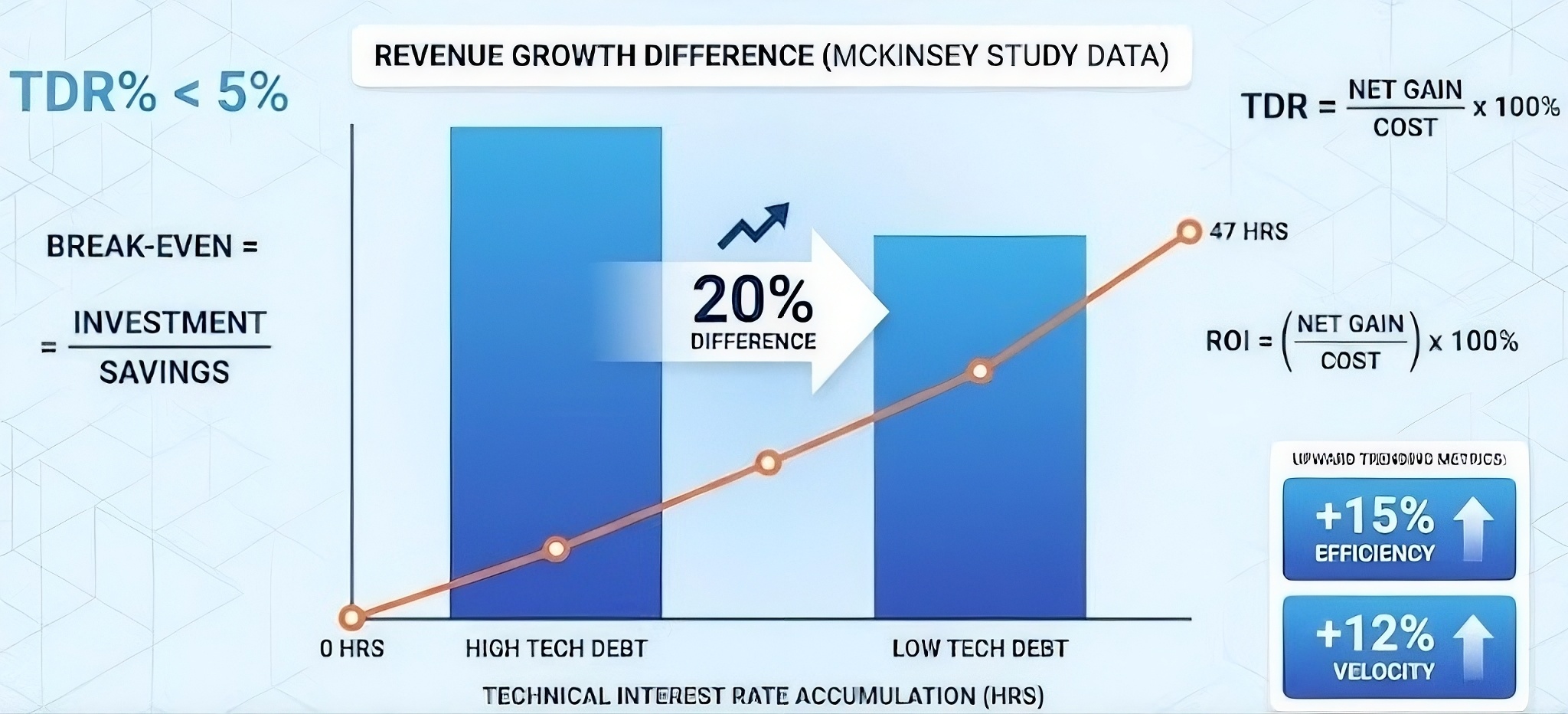
McKinsey estimates that between 20% and 40% of the value of many companies’ technology stack is already compromised by technical debt, and that a significant portion of the budget allocated to innovation ends up being diverted to address its consequences.